Rotational dynamics
📘 ROTATIONAL DYNAMICS
Complete NEB Physics Notes | Grade XI-XII
📖 Introduction
In our previous studies, we learned about linear motion where objects move along straight or curved paths. However, many objects in nature and engineering do not simply translate; they rotate about an axis.
🎯 Common Examples of Rotational Motion:
- A spinning wheel 🎡
- A rotating fan 🌀
- The Earth spinning on its axis 🌍
- A door opening on its hinges 🚪
Rotational Dynamics is the branch of mechanics that deals with the motion of objects rotating about a fixed axis. Just as we studied forces and their effects on linear motion (Newton's laws), we now study torques and their effects on rotational motion.
1.1 Equations of Angular Motion
🔹 Angular Motion: Basic Concepts
When a rigid body rotates about a fixed axis, every particle of the body moves in a circle. The motion of the entire body can be described by angular quantities.
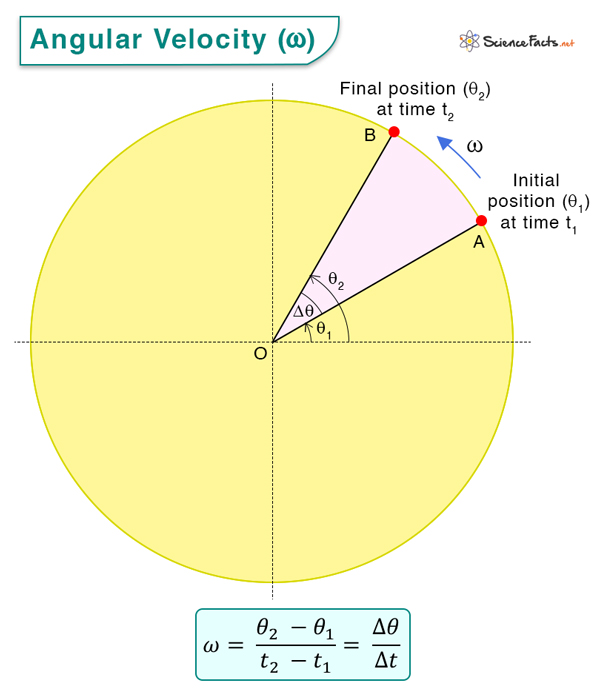
Figure 1.1: Angular displacement and angular velocity representation
| Quantity | Definition | Formula | Unit |
|---|---|---|---|
| Angular Displacement (θ) | The angle through which a body rotates about its axis | — | radian (rad) |
| Angular Velocity (ω) | The rate of change of angular displacement | \( \omega = \frac{d\theta}{dt} \) | rad/s or rad s⁻¹ |
| Angular Acceleration (α) | The rate of change of angular velocity | \( \alpha = \frac{d\omega}{dt} \) | rad/s² or rad s⁻² |
🔹 Equations of Angular Motion (for Constant Angular Acceleration)
The Three Equations of Angular Motion:
- \( \omega = \omega_0 + \alpha t \)
- \( \theta = \omega_0 t + \frac{1}{2}\alpha t^2 \)
- \( \omega^2 = \omega_0^2 + 2\alpha\theta \)
Where:
- ω₀ = initial angular velocity
- ω = final angular velocity
- α = angular acceleration (constant)
- t = time
- θ = angular displacement
🔹 Comparison Between Linear and Rotational Motion
There is a beautiful analogy between linear motion and rotational motion. Every linear quantity has a corresponding rotational quantity.
| Physical Quantity | Linear Motion | Rotational Motion |
|---|---|---|
| Displacement | s (meter) | θ (radian) |
| Velocity | v = ds/dt (m/s) | ω = dθ/dt (rad/s) |
| Acceleration | a = dv/dt (m/s²) | α = dω/dt (rad/s²) |
| Mass (inertia) | m (kg) | I (kg m²) |
| Force/Torque | F = ma (N) | τ = Iα (N m) |
| Momentum | p = mv (kg m/s) | L = Iω (kg m²/s) |
| Kinetic Energy | KE = ½mv² (J) | KE = ½Iω² (J) |
| Work | W = F·s (J) | W = τ·θ (J) |
| Power | P = F·v (W) | P = τ·ω (W) |
💡 Key Point: Conversion Rule
To convert any equation from linear to rotational form, simply replace:
s → θ | v (or u) → ω (or ω₀) | a → α | m → I | F → τ | p → L
1.2 Derivation of Rotational Kinetic Energy
When a rigid body rotates about a fixed axis, every particle of the body has kinetic energy due to its motion. The total kinetic energy of the rotating body is called Rotational Kinetic Energy.
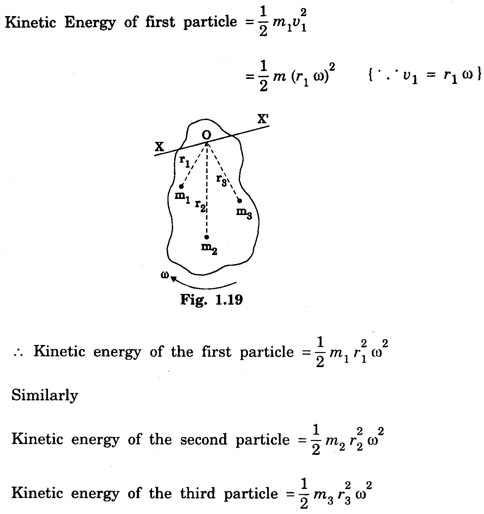
Figure 1.2: Particles rotating about a fixed axis with different distances
Derivation Steps:
Consider: A rigid body rotating about a fixed axis with angular velocity ω.
Let: The body consists of many particles of masses m₁, m₂, m₃, ... at distances r₁, r₂, r₃, ... from the axis of rotation.
- Each particle moves in a circular path. The linear velocity of the i-th particle is: vᵢ = rᵢω
- The kinetic energy of the i-th particle is: KEᵢ = ½mᵢv²
- Substituting vᵢ = rᵢω: KEᵢ = ½mᵢ(rω)² = ½mᵢrᵢ²ω²
- Total kinetic energy of the entire body: KEₜₒₜₐₗ = Σ KEᵢ = Σ(½mᵢrᵢ²ω²)
- Taking ω² common: KEₜₒₜₐₗ = ½ω² Σ(mᵢrᵢ²)
- The quantity Σ(mᵢr²) is defined as Moment of Inertia (I)
📌 Final Result:
\[ \boxed{KE_{rot} = \frac{1}{2}I\omega^2} \]
Physical Interpretation:
| Aspect | Explanation |
|---|---|
| Analogy | This equation is analogous to linear kinetic energy: KE = ½mv² |
| Role of I | I (moment of inertia) plays the role of mass |
| Role of ω | ω (angular velocity) plays the role of linear velocity |
| Energy | A body with larger moment of inertia rotating at the same angular velocity will have more kinetic energy |
⚠️ Important Note for Exams
This derivation is frequently asked in NEB board exams. Remember to clearly define all symbols and state that ω is the same for all particles of the rigid body.
1.3 Moment of Inertia and Radius of Gyration
🔹 Moment of Inertia (I)
Definition: Moment of inertia of a body about a given axis of rotation is defined as the sum of the products of the masses of all particles and the square of their distances from the axis of rotation.
\[ I = \sum(m_i r_i^2) \]
In continuous form: \[ I = \int r^2 dm \]
Unit: kg m²
Physical Significance:
- Moment of inertia is the rotational analog of mass in linear motion
- It represents the resistance of a body to change in its rotational motion
- A body with larger moment of inertia is harder to rotate (and harder to stop once rotating)
- It depends on: Mass, Distribution of mass, Position of axis
🔹 Radius of Gyration (K)
Definition: Radius of gyration of a body about a given axis is the distance from the axis at which, if the entire mass of the body were concentrated, the moment of inertia would remain the same.
Mathematical Expression:
\[ \boxed{I = MK^2} \quad \text{or} \quad \boxed{K = \sqrt{\frac{I}{M}}} \]
Unit: meter (m)
Physical Significance:
- Radius of gyration gives a single representative distance that characterizes the distribution of mass
- It simplifies calculations involving moment of inertia
- For a given mass, a body with larger radius of gyration has its mass distributed farther from the axis
1.4 Moment of Inertia of a Thin Uniform Rod
We will now derive the moment of inertia of a thin uniform rod about two different axes. These derivations are very important for NEB exams.
Case 1: Rod Rotating About its Center (Perpendicular to Length)
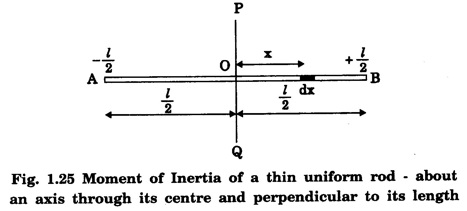
Figure 1.3: Moment of inertia of a thin uniform rod about an axis through its centre
Given:
- Mass of rod = M
- Length of rod = L
- Rod is uniform (mass is uniformly distributed)
To Find: Iₜₑₜₑ
- Place the origin at the center of the rod. Let x-axis be along the rod.
- Consider a small element of length dx at a distance x from the center.
- Mass per unit length (linear mass density): λ = M/L
- Mass of the small element: dm = λ dx = (M/L) dx
- Moment of inertia of this small element: dI = (dm) x² = (M/L) x² dx
- Total moment of inertia (integrating from -L/2 to +L/2): Iₜₑₙₜₑᵣ = ∫₋ₗ/₂⁺ˡ/² (M/L) x² dx
- Taking (M/L) outside: Iₜₑₙₜₑᵣ = (M/L) ∫₋ₗ/₂⁺ˡ/² x² dx
- Evaluating the integral: Iₜₑₙₜₑᵣ = (M/L) × (L³/12)
📌 Final Result:
\[ \boxed{I_{center} = \frac{ML^2}{12}} \]
Radius of Gyration: \[ K_{center} = \sqrt{\frac{I}{M}} = \frac{L}{\sqrt{12}} \]
Case 2: Rod Rotating About One End (Perpendicular to Length)
Given: The same rod rotating about an axis passing through one end and perpendicular to its length.
- Place the origin at one end of the rod (where the axis is).
- Consider a small element of length dx at a distance x from the end.
- Linear mass density: λ = M/L
- Mass of the element: dm = (M/L) dx
- Moment of inertia of this element: dI = (dm) x² = (M/L) x² dx
- Total moment of inertia (integrating from 0 to L): Iₑₙ𝒹 = ∫₀ᴸ (M/L) x² dx
- Taking (M/L) outside: Iₑₙ𝒹 = (M/L) ∫₀ᴸ x² dx
- Evaluating the integral: Iₑₙ𝒹 = (M/L) × (L³/3)
📌 Final Result:
\[ \boxed{I_{end} = \frac{ML^2}{3}} \]
🔑 Key Observation:
\[ I_{end} = \frac{ML^2}{3} = 4 \times \frac{ML^2}{12} = 4 \times I_{center} \]
⚡ Moment of inertia about the end is FOUR TIMES that about the center!
1.5 Relation Between Torque and Angular Acceleration
Just as force causes linear acceleration (F = ma), torque causes angular acceleration in rotational motion.
🔹 What is Torque?
Definition: Torque (also called moment of force) is the rotational effect of a force. It measures the tendency of a force to rotate a body about an axis.
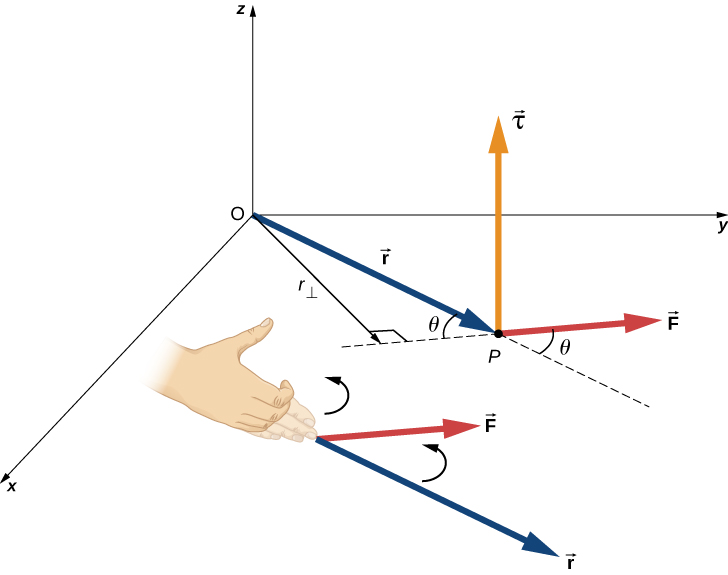
Figure 1.5: Torque as the cross product of position vector and force
\[ \vec{\tau} = \vec{r} \times \vec{F} \]
In scalar form (when F is perpendicular to r):
\[ \tau = rF \sin\theta \]
Where: θ is the angle between r and F
Unit: Newton-meter (N m)
🔹 Derivation: Relation τ = Iα
Consider: A rigid body rotating about a fixed axis under the action of an external torque.
- Consider a particle of mass mᵢ at a distance rᵢ from the axis. A tangential force Fᵢ acts on it.
- From Newton's second law: Fᵢ = mᵢaᵢ
- For circular motion: aᵢ = rᵢα
- Substituting: Fᵢ = mrᵢα
- Torque due to force Fᵢ: τᵢ = rFᵢ = rᵢ(mᵢrᵢα) = mᵢr²α
- Total torque: τₜₒₜₐₗ = Στᵢ = Σ(mᵢr²α)
- Since α is the same for all particles: τₜₒₜₐₗ = α Σ(mᵢr²)
- We recognize that Σ(mᵢr²) = I (moment of inertia)
📌 Newton's Second Law for Rotational Motion:
\[ \boxed{\tau = I\alpha} \]
Physical Interpretation:
- This equation shows that torque produces angular acceleration
- For a given torque, a body with larger moment of inertia will have smaller angular acceleration
- This is completely analogous to F = ma in linear motion
- If τ = 0, then α = 0 (no angular acceleration → constant angular velocity or rest)
1.6 Work and Power in Rotational Motion
🔹 Work Done by Torque
When a torque acts on a body and the body rotates through an angle, work is done by the torque.
Derivation of W = τθ:
- Consider a force F acting tangentially at a distance r from the axis of rotation.
- When the body rotates through a small angle dθ, the point moves through arc length: ds = r dθ
- Work done by force F: dW = F · ds = F(r dθ)
- But torque is τ = Fr, so: dW = τ dθ
- For a finite angular displacement θ: W = ∫ dW = ∫ τ dθ
- If torque is constant: W = τθ
📌 Work Done by Constant Torque:
\[ \boxed{W = \tau\theta} \]
(where θ is in radians)
🔹 Work-Energy Theorem for Rotation
The work done by net torque on a rotating body equals the change in its rotational kinetic energy.
\[ \boxed{W = \Delta KE_{rot} = \frac{1}{2}I(\omega^2 - \omega_0^2)} \]
🔹 Power in Rotational Motion
Definition: Power is the rate of doing work.
- Power is defined as: P = dW/dt
- Since W = τθ, differentiating: P = d(τθ)/dt
- If torque is constant: P = τ(dθ/dt)
- But dθ/dt = ω (angular velocity)
📌 Power in Rotational Motion:
\[ \boxed{P = \tau\omega} \]
Unit: Watt (W) or J/s
| Linear Motion | Rotational Motion |
|---|---|
| W = F·s | W = τ·θ |
| P = F·v | P = τ·ω |
1.7 Angular Momentum and Conservation Principle
🔹 Angular Momentum
Definition: Angular momentum of a rotating body about a given axis is the product of its moment of inertia and angular velocity.
\[ \boxed{L = I\omega} \]
Unit: kg m²/s or J·s (joule-second)
Direction: Angular momentum is a vector quantity. Its direction is along the axis of rotation, determined by the right-hand rule.
🔹 Relation Between Torque and Angular Momentum
- Angular momentum is: L = Iω
- Rate of change of angular momentum: dL/dt = d(Iω)/dt
- For a rigid body, I is constant: dL/dt = I(dω/dt) = Iα
- But we know that τ = Iα, therefore: τ = dL/dt
⚡ Torque equals the rate of change of angular momentum
🔹 Principle of Conservation of Angular Momentum
Statement: If no external torque acts on a system, the total angular momentum of the system remains constant.
Mathematical Form:
\[ \text{If } \tau_{external} = 0, \text{ then } L = \text{constant} \]
\[ \boxed{I_1\omega_1 = I_2\omega_2} \]
Proof of Conservation of Angular Momentum:
Given: No external torque acts on a system (τₑₓₜ = 0)
To Prove: Angular momentum remains constant (L = constant)
- We know that: τ = dL/dt
- If τₑₓₜₑᵣₙₐ = 0, then: dL/dt = 0
- This means L does not change with time: L = constant
- If moment of inertia changes from I₁ to I₂, and angular velocity changes from ω₁ to ω₂: Lᵢₙᵢₜᵢₐₗ = Lբᵢₙₐ → I₁ω₁ = I₂ω₂
🔹 Practical Applications
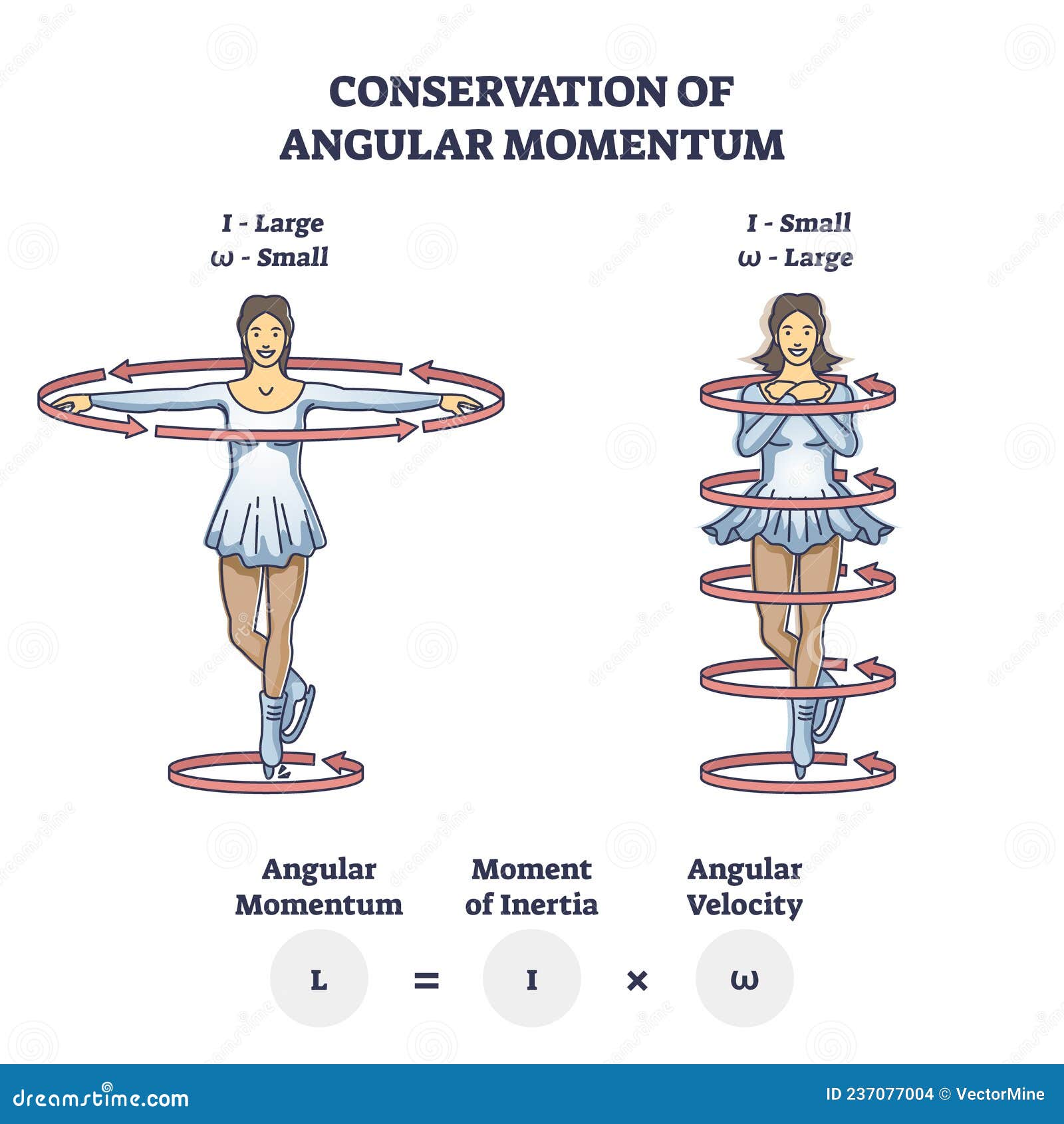
Figure 1.6: Conservation of Angular Momentum - Ice Skater Example
| Application | Explanation |
|---|---|
| 🎿 Ice Skater Spinning | When an ice skater pulls her arms inward, her moment of inertia (I) decreases. To conserve angular momentum (Iω = constant), her angular velocity (ω) increases. She spins faster! |
| 🤿 Diver's Somersault | A diver curls into a ball to reduce I and spin faster. Extends body to increase I and slow down rotation before entering water. |
| 🚲 Spinning Bicycle Wheel | A spinning bicycle wheel resists change in orientation due to its angular momentum. This is why bicycles are stable when moving. |
1.8 Numerical Problems and Conceptual Questions
📝 Solved Numerical Problems
Problem 1 (Easy Level)
Question: A wheel starting from rest rotates with a constant angular acceleration of 2 rad/s². Calculate: (a) the angular velocity after 5 seconds, (b) the number of revolutions completed in this time.
Given:
| Parameter | Value |
|---|---|
| Initial angular velocity, ω₀ | 0 (starts from rest) |
| Angular acceleration, α | 2 rad/s² |
| Time, t | 5 s |
Solution:
(a) Finding ω:
\[ \omega = \omega_0 + \alpha t = 0 + (2)(5) = \boxed{10 \text{ rad/s}} \]
(b) Finding angular displacement θ:
\[ \theta = \omega_0 t + \frac{1}{2}\alpha t^2 = 0 + \frac{1}{2}(2)(5)^2 = 25 \text{ radians} \]
\[ \text{Number of revolutions} = \frac{\theta}{2\pi} = \frac{25}{2 \times 3.14} = \boxed{3.98 \approx 4 \text{ revolutions}} \]
Problem 2 (Moderate Level)
Question: A thin uniform rod of mass 2 kg and length 1 m is pivoted at one end and rotates in a vertical plane. If the rod is released from rest in the horizontal position, find: (a) its moment of inertia about the pivot, (b) the angular acceleration at the instant of release, (c) angular velocity when it becomes vertical. [Take g = 10 m/s²]
Given:
| Parameter | Value |
|---|---|
| Mass of rod, M | 2 kg |
| Length of rod, L | 1 m |
| g | 10 m/s² |
Solution:
(a) Moment of inertia about the pivot (one end):
\[ I = \frac{ML^2}{3} = \frac{(2)(1)^2}{3} = \boxed{0.667 \text{ kg m}^2} \]
(b) Angular acceleration at release:
\[ \tau = Mg \times \frac{L}{2} = (2)(10)(0.5) = 10 \text{ N m} \]
\[ \alpha = \frac{\tau}{I} = \frac{10}{2/3} = \boxed{15 \text{ rad/s}^2} \]
(c) Angular velocity when vertical:
Using conservation of energy:
\[ Mg\frac{L}{2} = \frac{1}{2}I\omega^2 \]
\[ 10 = \frac{1}{2}\left(\frac{2}{3}\right)\omega^2 \]
\[ \omega = \boxed{5.48 \text{ rad/s}} \]
Problem 3 (Exam Level - NEB Pattern)
Question: A solid cylinder of mass 5 kg and radius 0.2 m is rotating about its axis with an angular velocity of 10 rad/s. Calculate: (a) its moment of inertia, (b) rotational kinetic energy, (c) angular momentum. If a constant torque of 2 N m is applied to stop it, find: (d) angular retardation, (e) time taken to stop, (f) number of revolutions before stopping.
Given:
| Parameter | Value |
|---|---|
| Mass, M | 5 kg |
| Radius, R | 0.2 m |
| Initial angular velocity, ω₀ | 10 rad/s |
| Torque applied, τ | 2 N m (opposing rotation) |
| For solid cylinder | I = ½MR² |
| Part | Calculation | Answer |
|---|---|---|
| (a) Moment of inertia | I = ½(5)(0.2)² | 0.1 kg m² |
| (b) Rotational KE | KE = ½(0.1)(10)² | 5 J |
| (c) Angular momentum | L = (0.1)(10) | 1 kg m²/s |
| (d) Angular retardation | α = -2/0.1 | 20 rad/s² |
| (e) Time to stop | t = 10/20 | 0.5 s |
| (f) Revolutions | θ = 2.5/(2π) | ≈ 0.4 |
❓ Conceptual Questions and Answers
| Q | Answer |
|---|---|
| Q1. Why is it easier to open a door by pushing at the edge rather than near the hinges? | Torque (τ) depends on both the force applied and the perpendicular distance from the axis of rotation (τ = rF). When we push at the edge of the door, the distance r is maximum, producing maximum torque for the same force. Near the hinges, r is small, so torque is small, requiring more force. |
| Q2. Why does an ice skater spin faster when she pulls her arms inward? | When the skater pulls her arms inward, she reduces her moment of inertia (I). Since no external torque acts, angular momentum is conserved: L = Iω = constant. If I decreases, ω must increase proportionally. |
| Q3. A solid sphere and a hollow sphere of the same mass and radius are released from the top of an inclined plane. Which one reaches the bottom first? | The solid sphere will reach first. The hollow sphere has a larger moment of inertia, so more energy goes into rotational motion, leaving less for translational motion. The solid sphere achieves higher linear velocity. |
📋 Summary of Important Formulas
Rotational Kinematics
| Formula | Description |
|---|---|
| \( \omega = \frac{d\theta}{dt} \) | Angular velocity |
| \( \alpha = \frac{d\omega}{dt} \) | Angular acceleration |
| \( \omega = \omega_0 + \alpha t \) | First equation |
| \( \theta = \omega_0 t + \frac{1}{2}\alpha t^2 \) | Second equation |
| \( \omega^2 = \omega_0^2 + 2\alpha\theta \) | Third equation |
Moment of Inertia
| Formula | Description |
|---|---|
| \( I = \sum(m_i r_i^2) \) | General definition |
| \( I = MK^2 \) | Radius of gyration |
| \( I = \frac{ML^2}{12} \) | Rod (about center) |
| \( I = \frac{ML^2}{3} \) | Rod (about end) |
Rotational Dynamics
| Formula | Description |
|---|---|
| \( KE_{rot} = \frac{1}{2}I\omega^2 \) | Rotational kinetic energy |
| \( \tau = I\alpha \) | Newton's 2nd law (rotation) |
| \( \tau = rF \sin\theta \) | Torque definition |
| \( W = \tau\theta \) | Work done |
| \( P = \tau\omega \) | Power |
Angular Momentum
| Formula | Description |
|---|---|
| \( L = I\omega \) | Angular momentum |
| \( \tau = \frac{dL}{dt} \) | Torque-angular momentum relation |
| \( I_1\omega_1 = I_2\omega_2 \) | Conservation (when τₑₓₜ = 0) |
Relations
| Formula | Description |
|---|---|
| \( v = r\omega \) | Tangential velocity |
| \( a_t = r\alpha \) | Tangential acceleration |
| \( a_c = r\omega^2 \) | Centripetal acceleration |
⚠️ Common Mistakes to Avoid
- Forgetting to convert degrees to radians
- Using wrong moment of inertia formula
- Confusing angular and linear quantities
- Missing the negative sign in retardation
- Not clearly stating assumptions in derivations
- Skipping unit conversion
✍️ Derivation Writing Tips
- Always start with "Consider..." and clearly state what you're analyzing
- Draw a simple diagram (even in text form)
- Clearly write "Given," "To Find," and "Solution"
- Number your steps
- Box or highlight the final answer
- Write units in the final answer
🧠 Quick Memory Tips
| Tip | Details |
|---|---|
| Linear → Rotational | s→θ, v→ω, a→α, m→I, F→τ, p→L |
| Rod moments | Center = L²/12, End = L²/3 (End is 4× Center) |
| Conservation | "No external torque → angular momentum constant" |
| KE formula | Same form as linear: ½mv² becomes ½Iω² |
📚 Before the Exam Checklist
- Practice all three derivations multiple times
- Solve at least 10 numerical problems from past NEB questions
- Memorize all formulas in the summary section
- Understand the physical meaning of each quantity
- Review the comparison table between linear and rotational motion
🏁 Conclusion
Rotational dynamics is a fundamental topic in physics that extends our understanding from linear motion to rotational motion. The beautiful symmetry between linear and rotational quantities makes this chapter both interesting and manageable.
Key Takeaways:
- Every linear quantity has a rotational analog
- Moment of inertia is the rotational equivalent of mass
- Torque causes angular acceleration, just as force causes linear acceleration
- Angular momentum is conserved when no external torque acts
- All equations have the same mathematical form as their linear counterparts
Mastering this chapter requires:
- Clear understanding of basic concepts
- Thorough practice of derivations
- Solving varied numerical problems
- Understanding real-life applications